One engine for real-time sync and workflow automation.
StackSync removes the infrastructure and API work from your team. You connect systems; it keeps them in two-way sync and runs the automation around them.
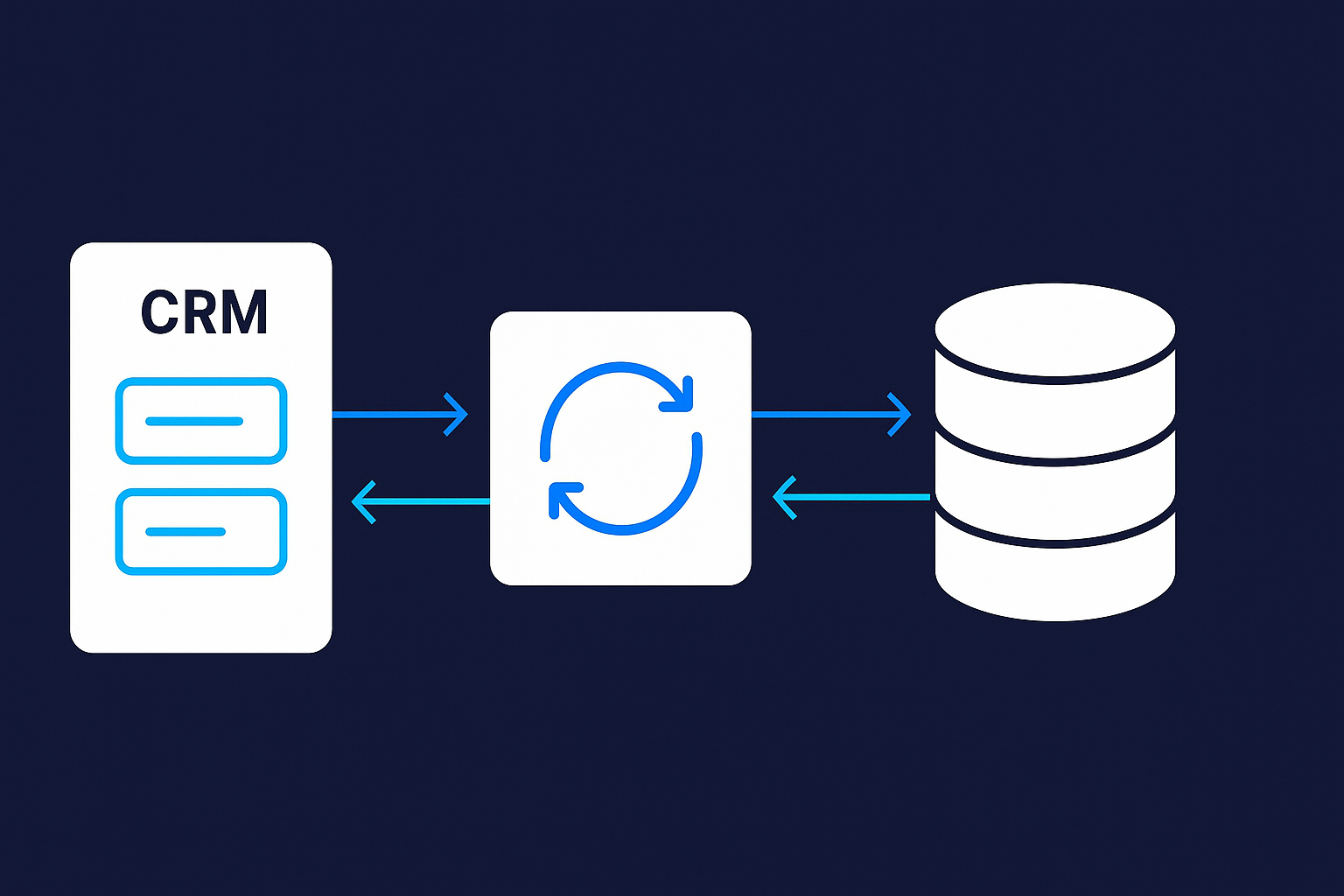
From two disconnected systems to one synced pair.
Connect both systems
Authenticate your CRM, ERP, app, or database with the protocols your team already uses: OAuth 2, SSL, SSH, or a VPC link. There are no agents to install on production boxes.
Let it read the schema
StackSync inspects both sides, maps fields across mismatched names and datatypes, and proposes a schema. If the destination table does not exist, it creates one for you.
Set the direction and rules
Choose one-way or two-way per sync, pick conflict rules, and decide which operations are allowed. Turn the sync on and records start flowing immediately.
Watch and automate
Monitor every pipeline, get alerted on drift over email, Slack, PagerDuty or WhatsApp, and attach no-code workflows to data events as you grow.
What the platform handles for you.
Continuous bidirectional engine
An event-driven engine watches both systems and reconciles changes in near real time. Sync direction is per-pipeline: mirror one way for reporting, or run full two-way sync for systems of record.
Linear scaling to billions of records
Managed message queues, batching, and parallelism handle high-velocity flows. Enterprise queues process up to 10M events per minute, so sync times stay low as volume grows.
Schema and type handling
Automatic mapping and type casting across systems, with new-table creation when there is nothing to sync into. Field names and datatypes do not have to match.
Workflows, queues, and a log explorer
Smart API rate limits, version control, event queues, and a log explorer let you run and audit automation at scale: no-code for business users, pro-code where it matters.
See the connectors, then try it.
Browse the connector directory or start a free trial and run your first sync today.